



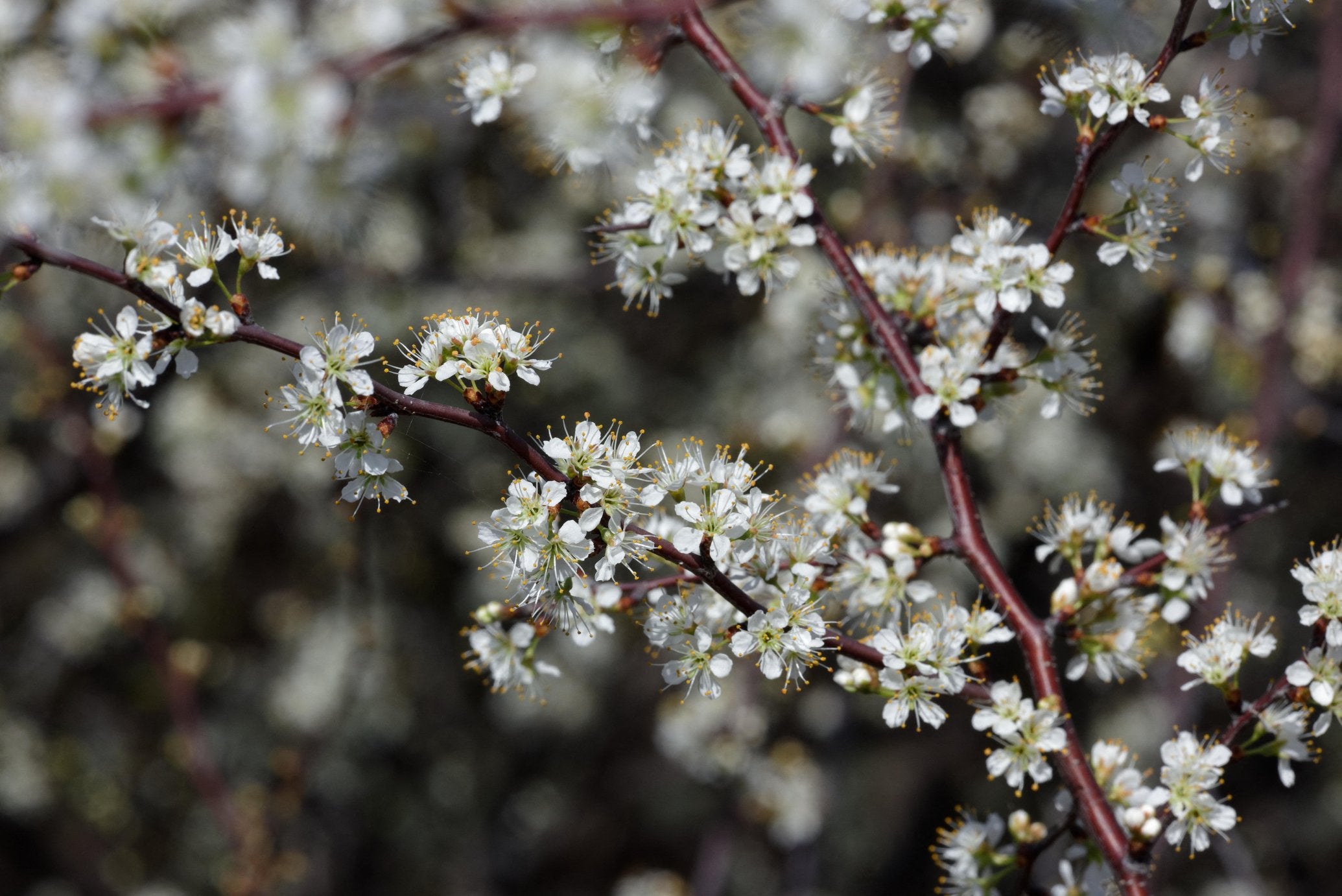
Prunus angustifolia (Chickasaw Plum)
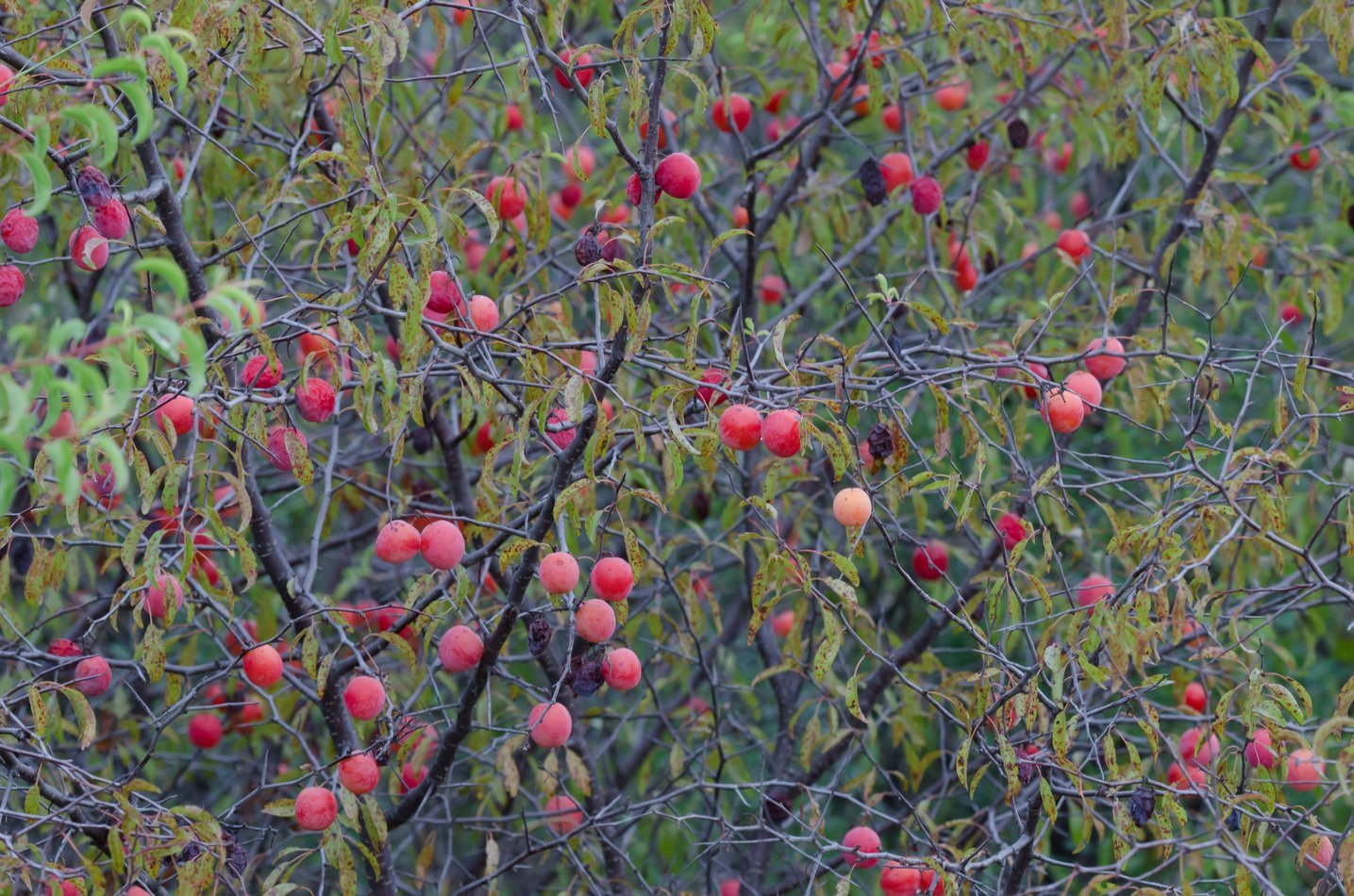
Chickasaw Plum is an early bloomer featuring sweet-scented white flowers. Blooms are followed by fruit that can be eaten fresh or used in baking. Birds and mammals eat the fruit. Various insects visit the flowers. It provides cover and nesting sites for wildlife, including northern bobwhite, painted bunting, Bell's vireo, brown thrasher and loggerhead shrike. It is important to lesser prairie-chickens for resting, escape, and thermal cover. Foliage turns pale yellow in the fall.
Chickasaw Plum grows in almost any soil, except strongly alkaline. Although partially shade tolerant, it performs best in full sun. The plums are drought tolerant and require little maintenance once established. Young plants should be protected from herbivores such as rabbits, deer, and cattle.
In full sun Chickasaw Plum grows dense and colonizes thickly; in the dappled shade of a woodland's edge it is more open and airy in appearance. Plant it where it has room to naturalize and it will ask for almost nothing in return.
Chickasaw Plum makes a great corner accent to a wildlife habitat backyard. It is an attractive, aromatic thicket plum for landscape restorations and shelter belt plantings.
AT A GLANCE
| Texas native | Yes |
| Water use | Low |
| Sun exposure | Full sun to part shade |
| Bloom color | White |
| Bloom time | Spring |
| Mature height | 6-15 ft |
| Attracts | Bees, birds, butterflies, mammals |
| Host plant | Satyrium titus (Coral Hairstreak), Papilio glaucus (Eastern Tiger Swallowtail), Celastrina ladon (Spring Azure), Limenitis archippus (Viceroy), and others |
| Edible part(s) | Fruit |
| Notes | Native bee friendly |
DISTRIBUTION MAPS
 Present in state Present in state |
 Present in county and native Present in county and native |
 Native to North America, but adventive & escaped in state Native to North America, but adventive & escaped in state |
 Not present in state Not present in state |
 Present and rare, native in county Present and rare, native in county |
 Previously present, now extinct Previously present, now extinct |
 Questionable presence (cross-hatched, regardless of color) Questionable presence (cross-hatched, regardless of color) |

Comment: Dormant