



A pollinator garden in North Texas doesn't need to be fussy. Our native plants evolved here with the heat, the clay, the drought, and the occasional ice storm, and they feed the native bees, butterflies, moths, and hummingbirds that evolved alongside them. Pick plants that bloom in succession from spring through fall, and your garden will be busy all year.
Here are ten reliable perennials for your pollinator garden.
1. Native Milkweeds (Asclepias species)
Monarchs lay their eggs only on milkweed, so if you want monarchs, you need it. Texas has many native milkweeds, and the ones that do well in North Texas gardens include:

- Antelope Horn Milkweed (Asclepias asperula) - a tough, low-growing plant with cream-and-green blooms in spring. It handles rocky, well-drained soil and drought.

- Green Milkweed (Asclepias viridis) - blooms on and off from spring through summer. A good fit for sunny, open sites, and it tolerates richer soils than Antelope Horn.

- Butterfly Weed (Asclepias tuberosa) - bright orange clusters in summer. A showy nectar source for bees and butterflies as well as a monarch host.

- Zizotes Milkweed (Asclepias oenotheroides) - a small, low-growing milkweed with pale green-and-cream blooms that suits dry, sunny spots.

- Whorled Milkweed (Asclepias verticillata) - thin, needle-like foliage and small white flowers from late spring into fall. It spreads gently into an airy colony.
Choose native milkweeds over tropical milkweed (Asclepias curassavica), which can disrupt monarch migration patterns. Plant a few different species so there is milkweed in leaf and bloom through more of the season.
2. Gregg's Mistflower

Gregg's Mistflower (Conoclinium greggii)
Its fluffy lavender-blue blooms in late summer and fall are a favorite of queen and monarch butterflies. It spreads gently into a tall ground cover and does well in sun to part shade.
3. Flame Acanthus
 Flame Acanthus (Anisacanthus quadrifidus var. wrightii)
4. Fall Aromatic Aster

Fall Aster (Symphyotrichum oblongifolium)
Fall Aster provides a dazzling display of purple daisy-like flowers in the fall, providing late season nectar for bees and butterflies. It also attracts beneficial insects.
5. Mealy Blue Sage

Mealy Blue Sage (Salvia farinacea)
Violet-blue flower spikes bloom on and off from late spring until frost. Native bees love it, and it fits easily into beds and borders. Cut it back lightly midsummer for a fresh flush of flowers.
6. Texas Lantana

Texas Lantana (Lantana urticoides)
A butterfly magnet from late spring to frost, with orange-and-yellow clusters that draw butterflies, such as gulf fritillary, skippers, and hairstreaks. It thrives in full sun and heat and needs little water once established. It dies back after a hard freeze and returns in spring.
7. Shrubby Boneset

Shrubby Boneset (Ageratina havanensis)
In fall, this shrubby perennial is covered in clouds of fragrant white flowers, and it can be one of the busiest plants in the garden when nectar is running low. Monarchs, queens, skippers, and many native bees and other pollinators crowd the blooms. It grows well in sun to part shade and fits naturally into a shrub border or along a woodland edge. In colder winters it may die back and resprout in spring.
8. Turk's Cap

Turk's Cap (Malvaviscus arboreus var. drummondii)
Most pollinator plants want full sun, but this one is great for shade. Its red, hibiscus-like flowers feed hummingbirds, butterflies and bees from summer into fall. It thrives in under mature trees, where many other plants struggle.
9. Autumn Sage

Autumn Sage (Salvia greggii)
Hummingbirds are drawn to Autumn Sage, particularly the red one. It blooms on and off spring through fall in shades of red, pink, white and coral. It's semi-evergreen, drought tolerant, and not fussy as long as good drainage is provided.
10. Rattlesnake Master
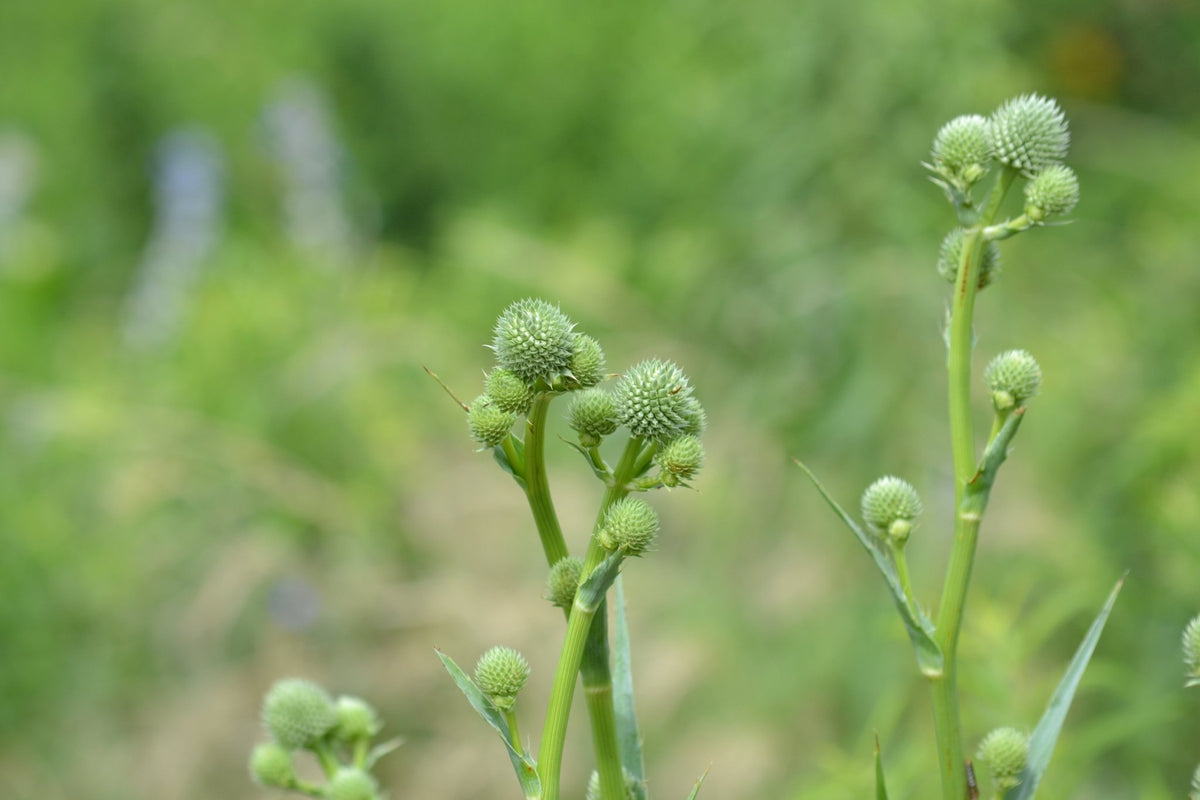
Rattlesnake Master (Eryngium yuccifolium)
It looks like nothing else in the garden, with spiky blue-green foliage and white globe flowers on tall stalks in the summer. It attracts native wasps, bees, and other beneficial insects, and is adaptable to moist and dry soil conditions.
Tips for Planting Success
- Plant with succession in mind. Include something blooming in every season so pollinators always have food.
- Plant in groups. Clusters of three to five of the same plant are easier for pollinators to find than single specimens.
- Skip the pesticides. Insecticides kill insect indiscriminately. Creating healthy ecosystem using native plants is all that is needed - it will attract predators that will control the pests naturally.
- Water deep and infrequently. Natives are tough, but they need help getting established.
- Leave some mess. Hollow stems, seed heads, and leaf litter shelter overwintering native bees and other insects. Wait until spring to tidy up.
Start Your Pollinator Garden
At Eco Blossom, every plant we sell is either native to Texas or well-adapted (with heavy emphasis on the native plants). We do not use pesticides so what you bring home is safe for the pollinators you're hoping to attract. We offer free local delivery to select Fort Worth zip codes, you can place your order online and schedule your pickup appointment during checkout. You are welcome to browse/buy during pickup. Or you're welcome to stop by one of our weekend Open House events to see or buy the plants in person, no appointment needed. Every purchase also donates 5% of pre-tax sales to a Texas conservation nonprofit of your choice.
Questions about what will work in your yard? Email us at info@ecoblossom.com.
