




Monarchs migrate through North Texas in the fall. Help them fuel up by planting native plants providing food for them to be able to make the 3,000 mile journey ahead of them. Heat, drought and storms can shift migration timing by days or even weeks, so planting with succession in mind is important.
Here are seven Texas native plants that serve as food for monarchs and other pollinators.
Gregg's Mistflower
Conoclinium greggii
Lavender-blue flowers attract monarch and queen butterflies.

Gregg's Mistflower spreads by rhizomes, which makes it an easy plant to divide and share. Cut it back after in early spring to promote growth.
Fall Aster
Symphyotrichum oblongifolium
Fall Aster turns into a dense mound of violet daisy-like flower, and attracts pollinators and beneficial insects.
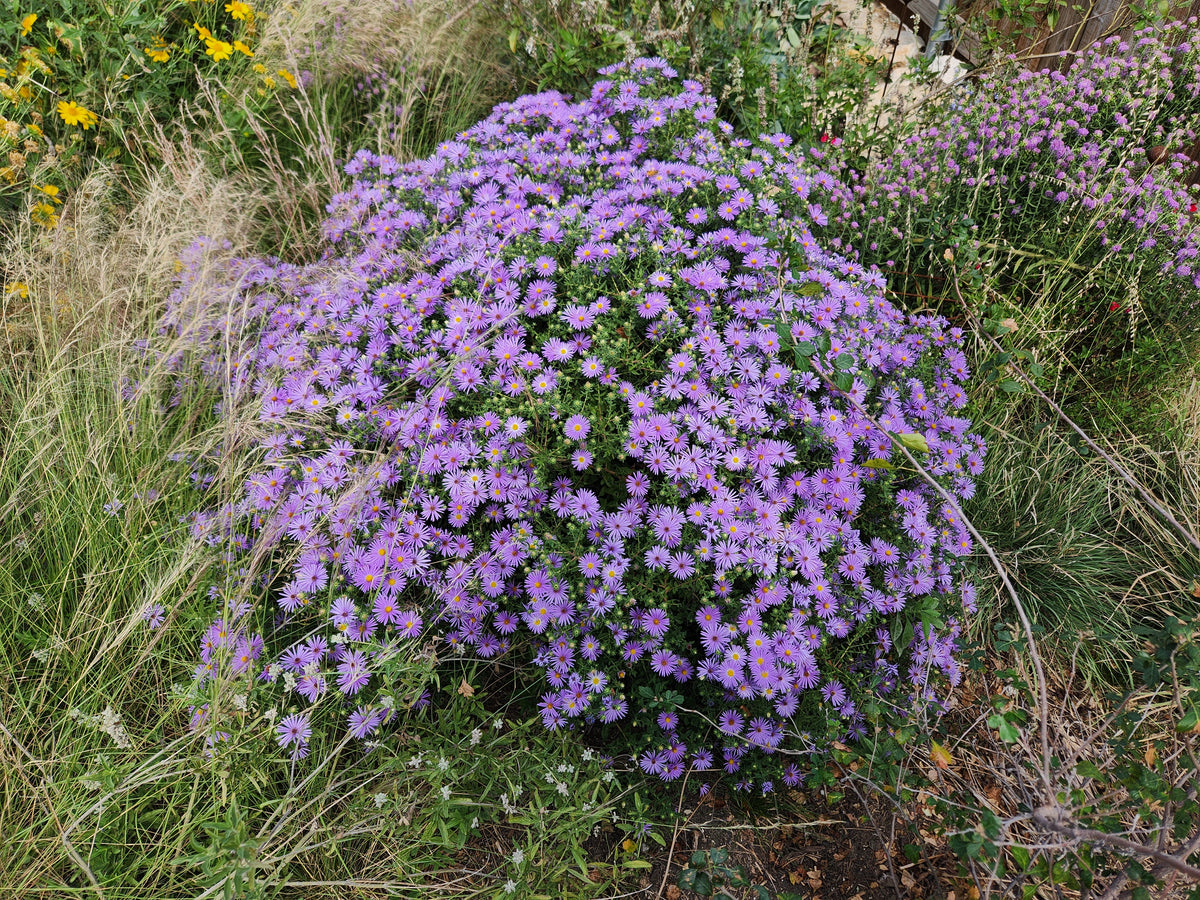
The crushed foliage smells pleasantly aromatic, which is where the other common name originates. Wait until the spring to trim it back to the basal rosette.
Frostweed
Verbesina virginica
Frostweed features clusters of white flowers that carry on into late fall when most shade plants are done blooming. Perfect for shade garden and pollinator favorite.
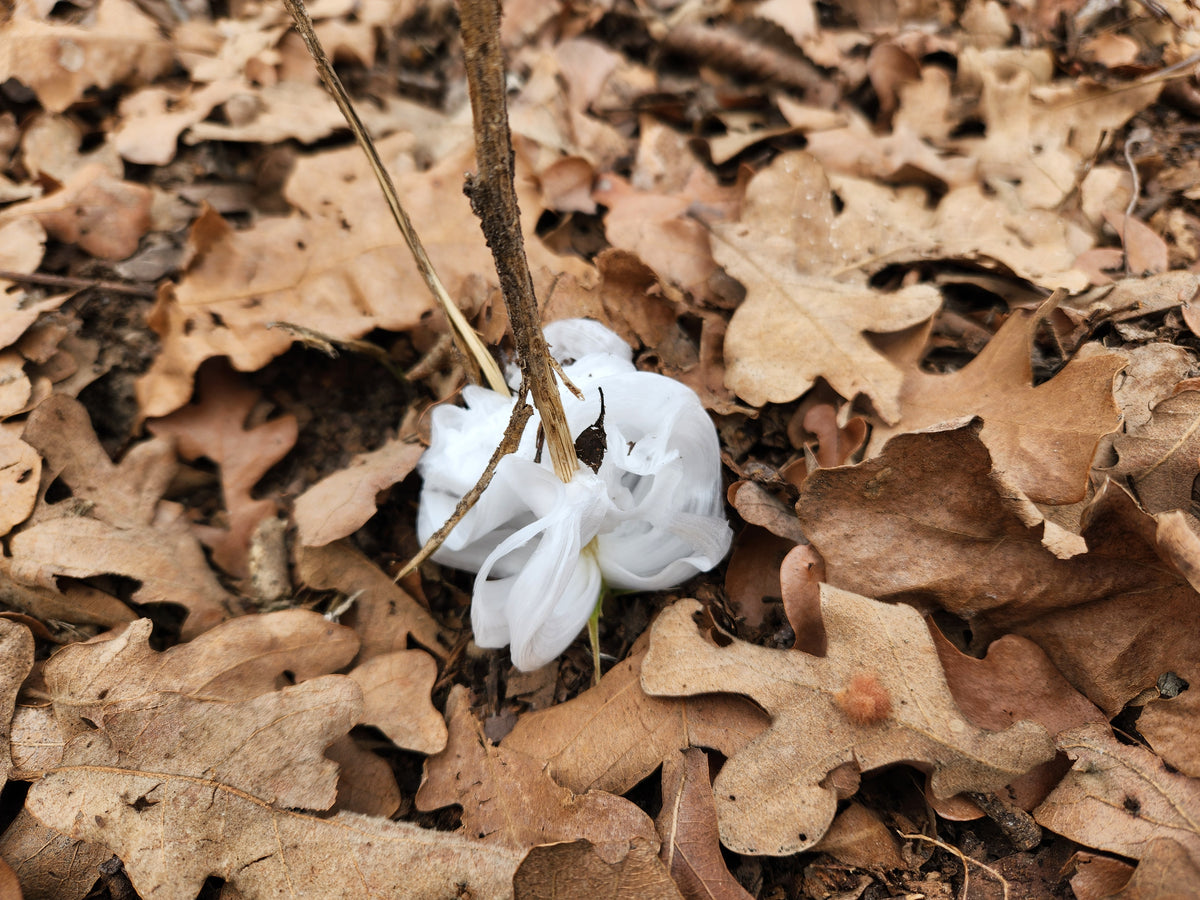
The name comes from a winter trick it performs: when hard freezes arrive, water pushed up through the stem freezes into curling ribbons of ice at the base. The plant is at its best naturalized along woodland edges and under trees rather than in a formal bed.
Shrubby Boneset
Ageratina havanensis
Shrubby Boneset (also known as White Mistflower) provides late season blooms that are always buzzing with pollinators. It features white flowers in October into November, when nectar is hardest to find.

Shrubby Boneset is a woody perennial that flowers on new growth - trim it in the spring to keep it bushy and blooming. In the right spot it is nearly carefree.
Maximilian Sunflower
Helianthus maximiliani
Maximilian Sunflower is the big, bold backbone of a fall pollinator garden, and a true North Central Texas native that grows in both the Cross Timbers and the Blackland Prairie ecoregions.
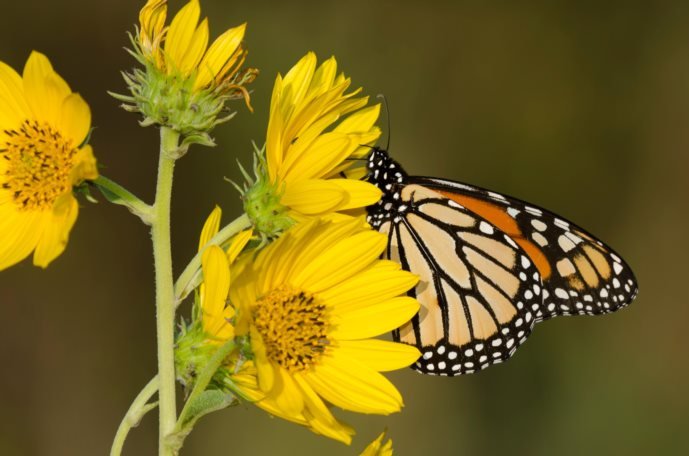
The flower heads follow the sun across the day, giving small pollinators a warm, flat landing pad, and the seeds feed birds into winter. Plants spread by rhizomes and seed into colonies, so give them space at the back of a border or along a fence, and divide every few years.
Cowpen Daisy
Verbesina encelioides
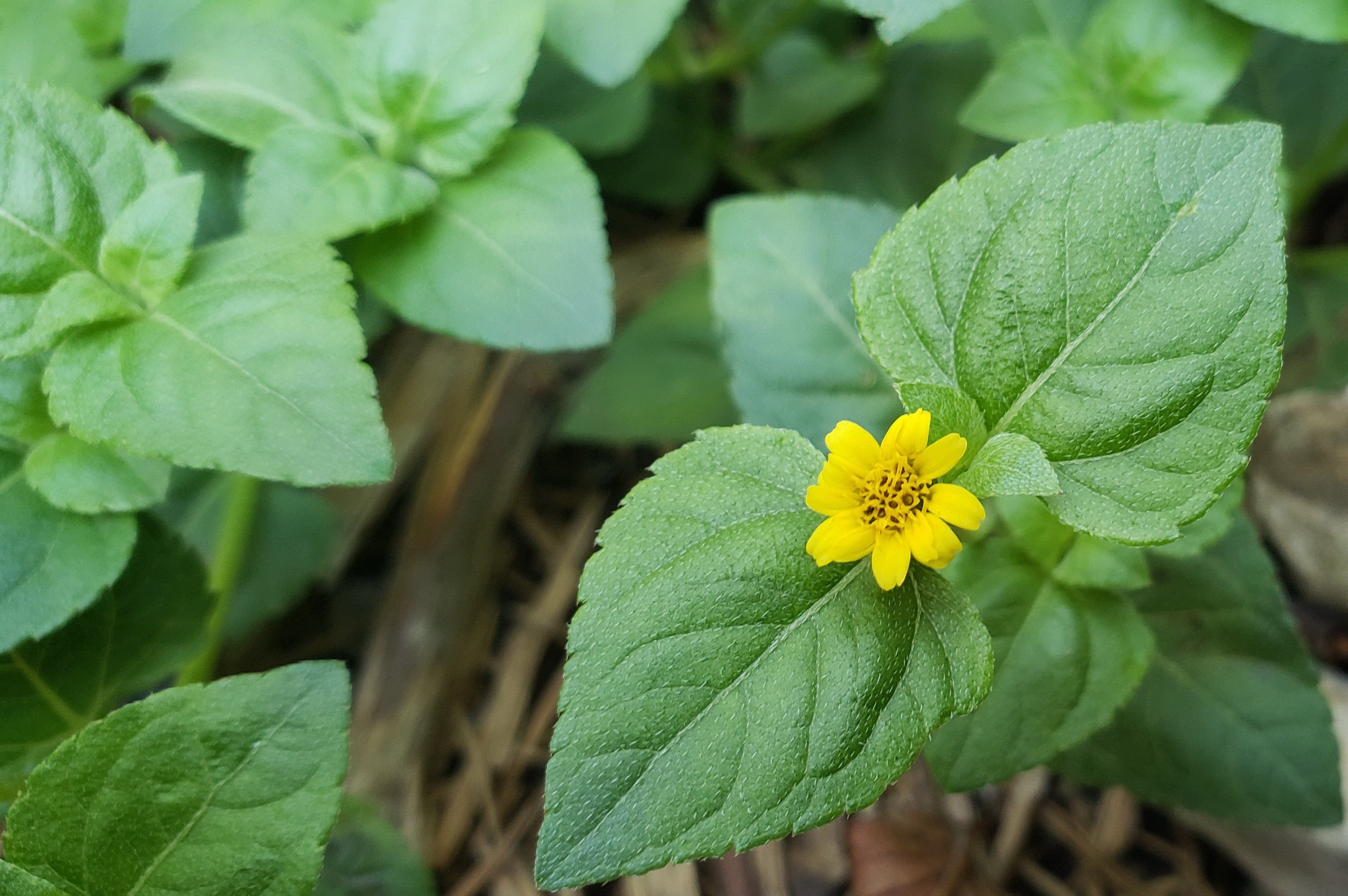
Cowpen Daisy is a plant you can count on for reliable blooms: a tough, tall annual that blooms from summer until frost and feeds butterflies right through the migration.
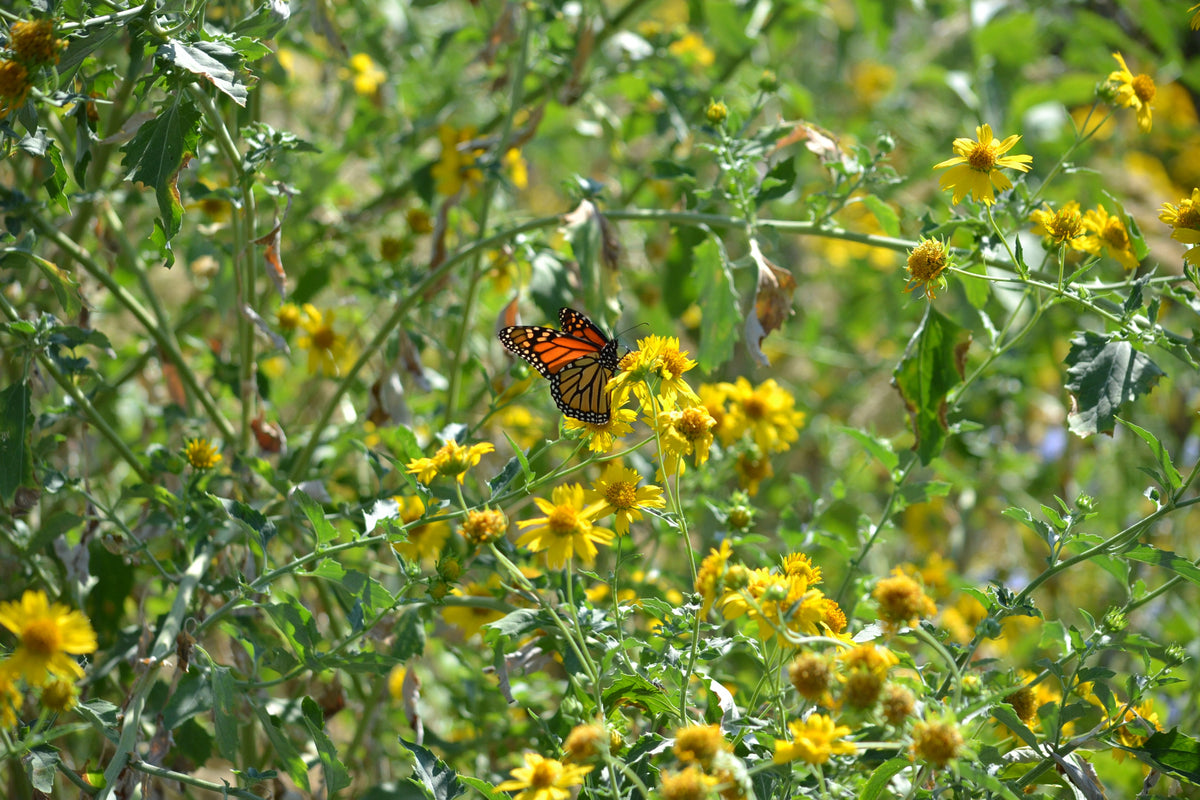
Cowpen Daisy freely reseeds, so one planting becomes a self-renewing patch. It is deer resistant and thrives where other flowers struggle, including hot, dry, poor ground. The gray-green leaves and their distinctive smell make it easy to identify.
Turk's Cap
Malvaviscus arboreus var. drummondii
Turk's Cap is a hummingbird magnet, but it is also utilize by bees and butterflies, including monarchs. It features bright red, never-fully-open flowers that keep coming from early summer into November and thrive in shade where most nectar plants will not.
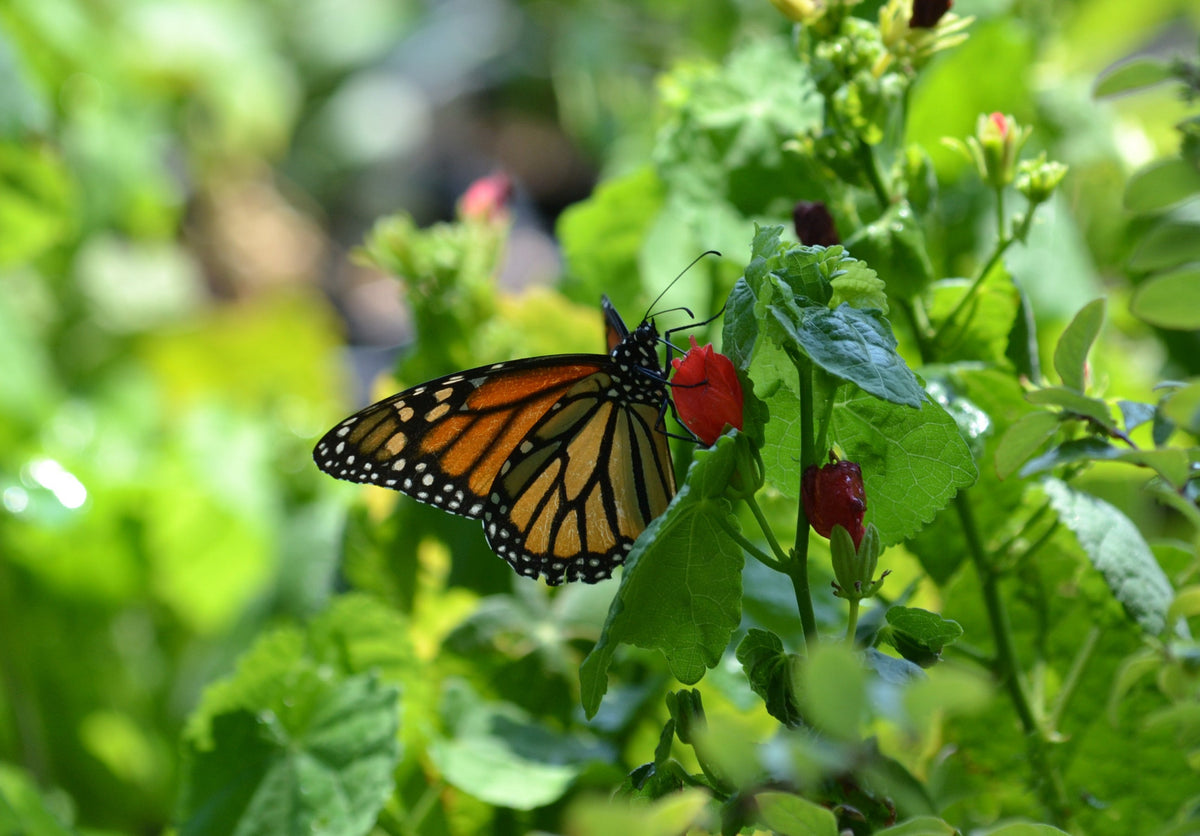
Turk's Cap dies back to the ground in winter and returns from its roots in spring. Its colonies are easy to keep in check by pulling or trimming unwanted shoots, and the fruit and flowers are edible. For shady Fort Worth pollinator beds, it is one of the very few natives that bloom heavily in the shade.
Putting It Together
Plant these in layers and you get a near-continuous buffet from September until the first hard freeze.
- Front of the bed: Gregg's Mistflower and Fall Aster.
- Back of the bed or along a fence: Maximilian Sunflower, Frostweed and Turk's Cap.
- Shade and woodland edge: Frostweed, Turk's Cap and Shrubby Boneset perform well in part sun to part shade.
- Gap filler: Cowpen Daisy, an annual that reseeds itself into hot, bare spots.
Come see the plants in person at a weekend Open House (no appointment needed) or order online and shop during your pickup appointment. 5% of every pre-tax sale goes to a Texas conservation nonprofit you choose.
Stop landscaping. Start rewilding.
